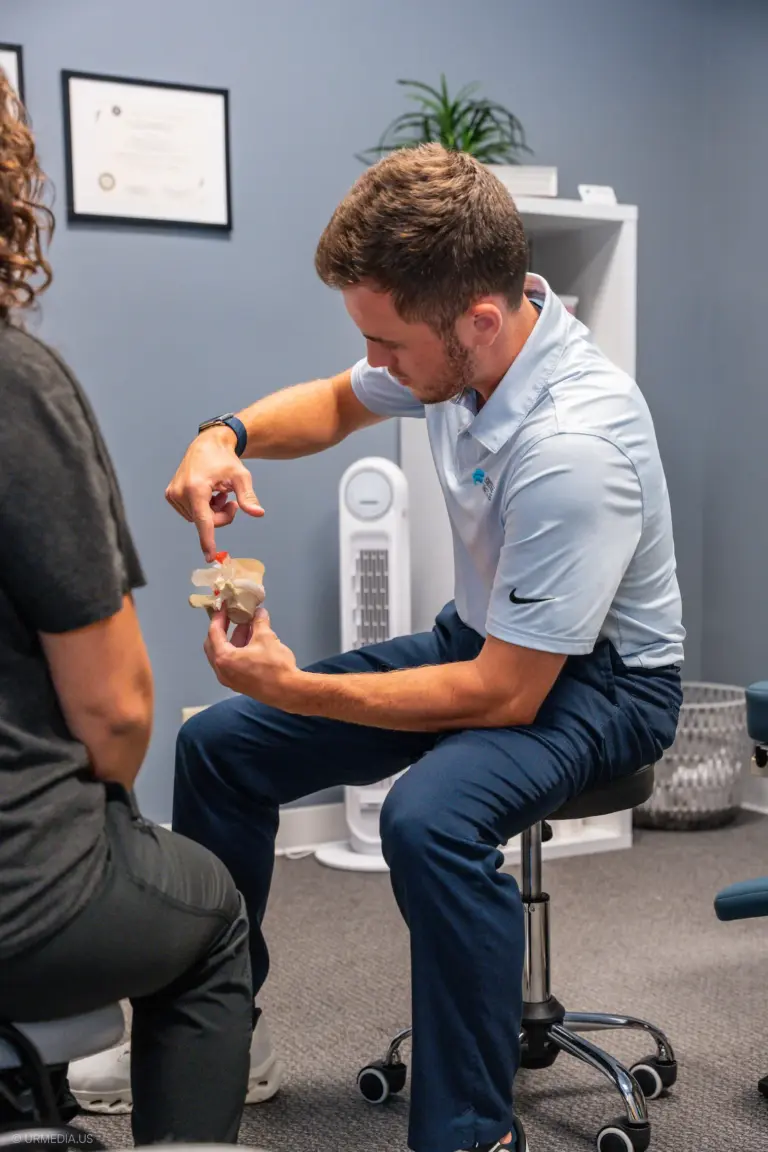
Low back pain is one of the most common reasons people see a doctor, and one of the most over-treated. If you have been told conflicting things, handed a generic exercise sheet, or sent straight for imaging, you have seen the fragmented version of spine care we built Fortitude to replace. We act as your Primary Spine Practitioner, a single trusted first stop for your spine. Our first job is not to treat you. It is to figure out what is actually going on, and match the plan to your back rather than to a protocol.
First, we rule out anything serious
The large majority of low back pain is what clinicians call non-specific. It is not coming from a dangerous cause, and it has a genuinely good outlook. A small number of cases do need faster or different care, such as a fracture, an infection, or nerve compression affecting the bowel or bladder. Screening for those is the first thing we do, every time. It is also why national guidelines recommend against routine imaging for ordinary low back pain (Chou et al., Annals of Internal Medicine, 2007). An early MRI usually does not change the plan, and it often finds abnormalities that were never the problem. In a large review of pain-free adults, disc degeneration appeared in 37% of 20-year-olds and 96% of 80-year-olds, and disc bulges in 30% to 84% depending on age (Brinjikji et al., AJNR, 2015). A bulging disc on a report is often just a normal part of aging, not proof of the cause of your pain. We read your images in the context of you.
The honest prognosis
For most people this is good news. Acute low back pain tends to improve substantially within the first several weeks (da C Menezes Costa et al., CMAJ, 2012), and staying active helps more than bed rest (Chou et al., 2007). Our job is to make that recovery faster and less miserable, and to catch the cases that are not following the expected path.
What treatment looks like
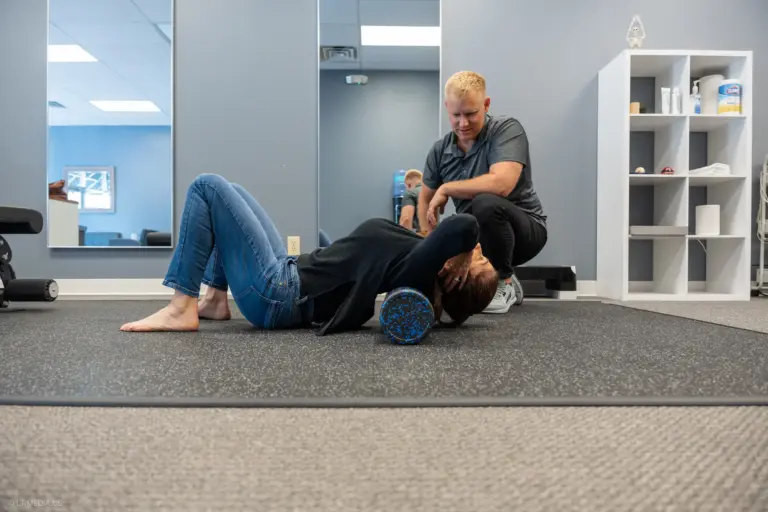
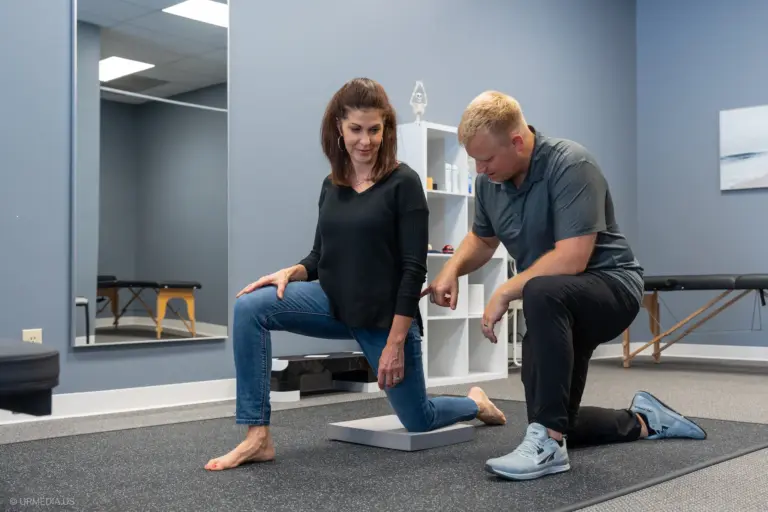
Guidelines point to non-drug care first: staying active, education, hands-on treatment like spinal manipulation and soft-tissue work, heat, and exercise (Chou et al., 2007; Qaseem et al., Annals of Internal Medicine, 2017). We start there, give it a fair trial, and watch how you respond. If you are improving, we continue and taper you out. If you are not responding the way we would expect, that is useful information, and we change course rather than repeat the same thing.
The research behind this page:
Qaseem A, et al. Noninvasive Treatments for Acute, Subacute, and Chronic Low Back Pain: A Clinical Practice Guideline From the American College of Physicians. Ann Intern Med. 2017;166(7):514-530.Chou R, et al. Diagnosis and Treatment of Low Back Pain: A Joint Clinical Practice Guideline from the American College of Physicians and the American Pain Society. Ann Intern Med. 2007;147(7):478-491.
Brinjikji W, et al. Systematic Literature Review of Imaging Features of Spinal Degeneration in Asymptomatic Populations. AJNR Am J Neuroradiol. 2015;36(4):811-816.
da C Menezes Costa L, et al. The prognosis of acute and persistent low-back pain: a meta-analysis. CMAJ. 2012;184(11):E613-E624.
Hill JC, et al. Comparison of stratified primary care management for low back pain with current best practice (STarT Back): a randomised controlled trial. Lancet. 2011;378(9802):1560-1571.
Murphy DR, et al. The primary spine practitioner as a new role in healthcare systems in North America. Chiropr Man Therap. 2022;30:6.