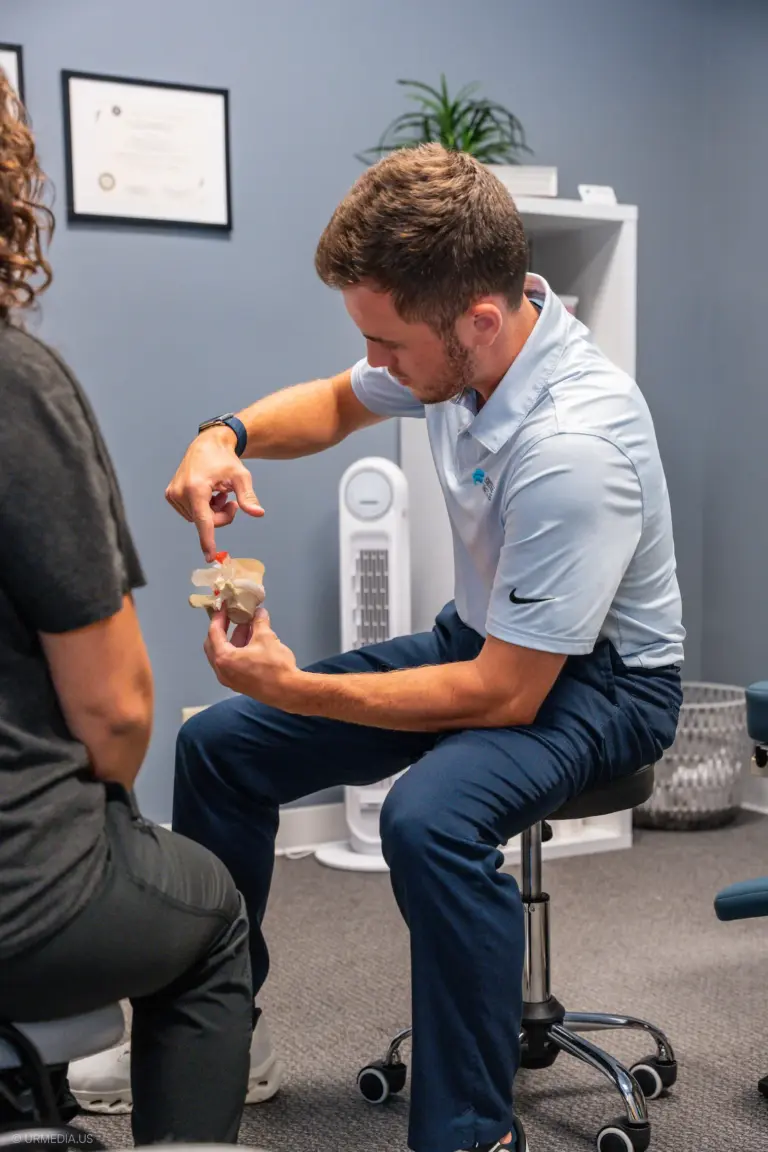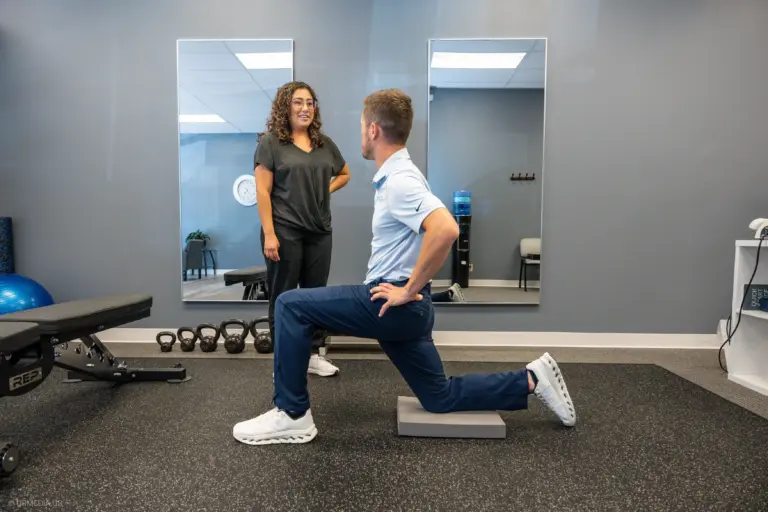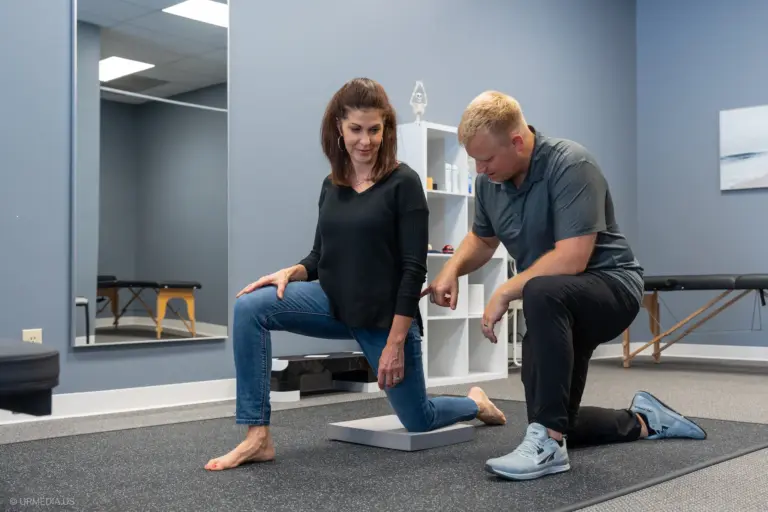
Neck pain is common, usually not dangerous, and often treated with a generic approach that ignores the fact that neck pain is not one condition. As your Primary Spine Practitioner, we start by sorting out which kind of neck pain you have, because the research is clear that the type should drive the treatment.
First, the screening
Most neck pain is mechanical with a good outlook. A minority of cases have features that warrant more caution, such as significant trauma, nerve involvement in the arm, or systemic warning signs. We screen for these up front so the few who need imaging or referral get it, and the majority who do not are not sent down that road unnecessarily.
Neck pain is not one thing, so we classify it
The current clinical practice guideline groups neck pain into categories: with mobility deficits, with headache, with radiating nerve symptoms, and with movement-coordination problems such as whiplash (Blanpied et al., JOSPT, 2017). Each responds best to a different mix of care. Figuring out which one you fit is the difference between a plan aimed at your problem and a plan aimed at the average.
The honest prognosis
For a new episode of mechanical neck pain, recovery is usually fastest in the first six to twelve weeks and then slows, and after a recent whiplash-type injury the guideline treats education and reassurance as part of the treatment itself (Blanpied et al., 2017).
What treatment looks like
The guideline supports hands-on care, cervical and thoracic manipulation or mobilization, paired with exercise for strength, endurance, and coordination, with the specific mix depending on your category (Blanpied et al., 2017). We build that around your category and your exam, then track your response. Improving range of motion and function tell us to continue. A lack of response tells us to reclassify or adjust.
The research behind this page:
Blanpied PR, et al. Neck Pain: Revision 2017. Clinical Practice Guidelines Linked to the International Classification of Functioning, Disability and Health From the Orthopaedic Section of the American Physical Therapy Association. J Orthop Sports Phys Ther. 2017;47(7):A1-A83.Murphy DR, et al. The primary spine practitioner as a new role in healthcare systems in North America. Chiropr Man Therap. 2022;30:6.