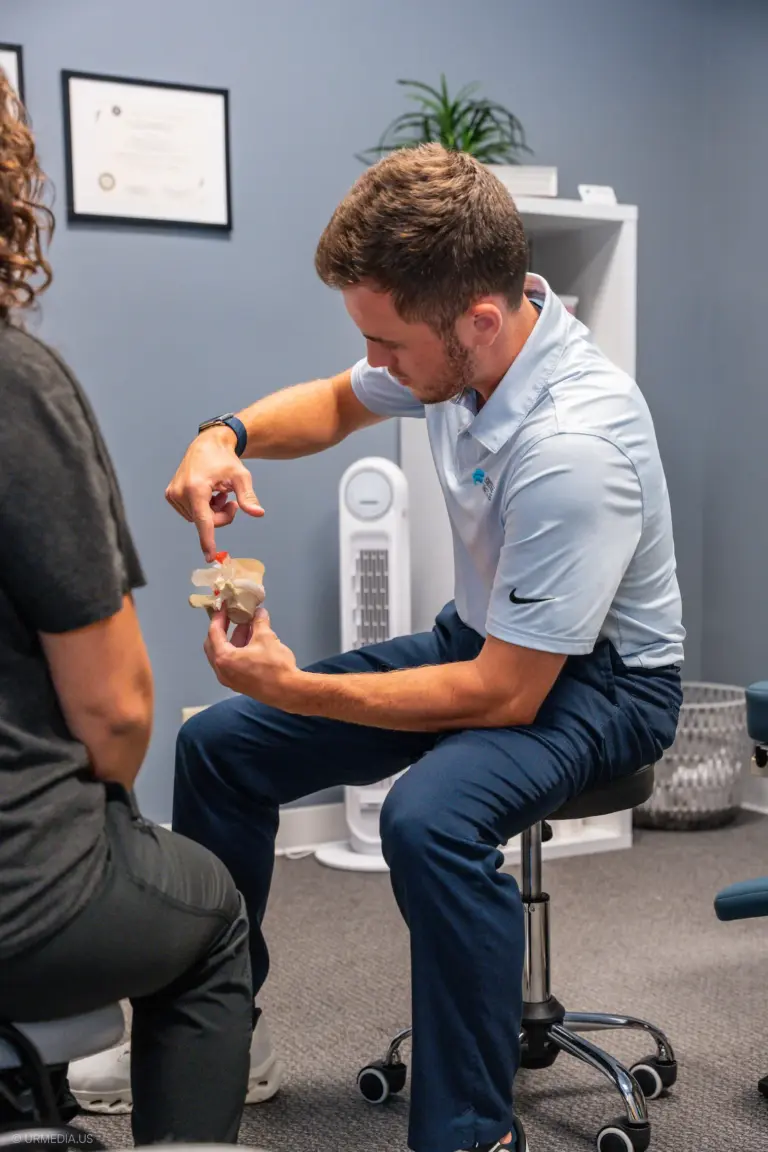
Sciatica, pain that travels from the low back or buttock down the leg, sometimes with numbness, tingling, or weakness, is frightening. Usually it is not serious, and usually it gets better. But usually is exactly why triage matters. Our job as your Primary Spine Practitioner is to sort the cases that resolve with the right care from the small number that need urgent attention.
The screening we never skip
A handful of symptoms mean you need care now, not next week: loss of bowel or bladder control, numbness in the saddle or groin area, or rapidly worsening leg weakness. These can signal a compression that requires emergency evaluation. Screening for them is the first thing we do, and if we see them, we get you to the right place immediately. This is the single most important reason to start with a practitioner whose first move is to assess, not to adjust.
The honest prognosis
For the great majority, the outlook is reassuring. Most people with sciatica improve within about three months, although for some the pain persists beyond a year (Jensen et al., BMJ, 2019). Even when a disc herniation is involved, surgery mainly changes the speed of recovery: in a major trial, early surgery relieved leg pain faster, but by one year 95% of patients in both groups reported recovery (Peul et al., NEJM, 2007). For sciatica that has already lasted four to twelve months, surgery gave clearly less leg pain at six months than continued conservative care (Bailey et al., NEJM, 2020), which is one reason symptoms that drag on deserve a surgical opinion.
What treatment looks like, and how we track it
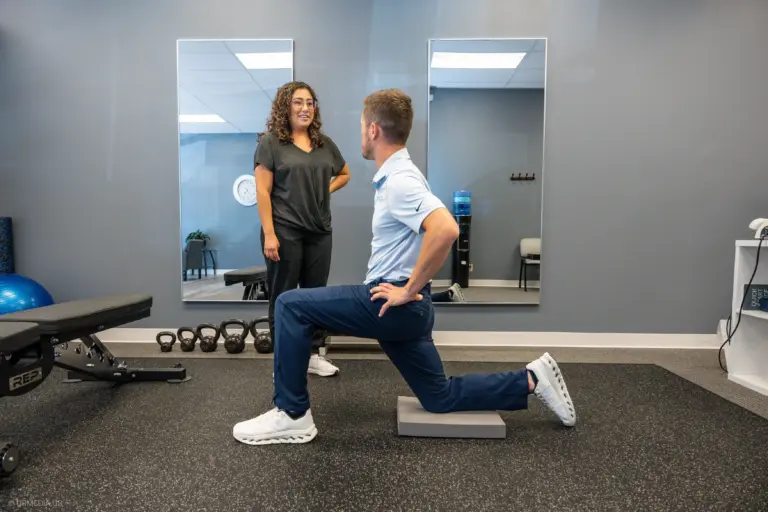
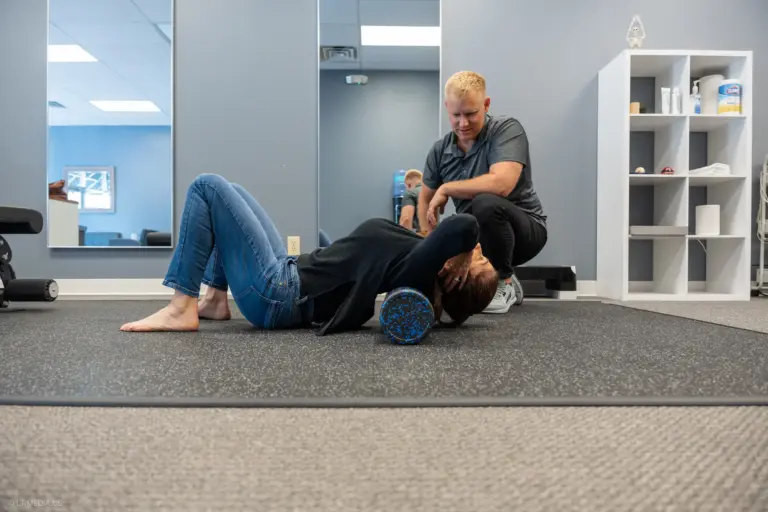
Early on we focus on keeping you moving within tolerance, calming the irritated nerve, educating you about the favorable course, and hands-on and exercise-based care tailored to your exam. Then we watch the trend. Improving leg pain and function, or symptoms moving out of the leg, tell us to stay the course. Stalling or worsening tells us to change the plan. We decide based on your response, not a fixed number of visits.
The research behind this page:
Jensen RK, et al. Diagnosis and treatment of sciatica. BMJ. 2019;367:l6273.Peul WC, et al. Surgery versus Prolonged Conservative Treatment for Sciatica. N Engl J Med. 2007;356(22):2245-2256.
Bailey CS, et al. Surgery versus Conservative Care for Persistent Sciatica Lasting 4 to 12 Months. N Engl J Med. 2020;382(12):1093-1102.
Murphy DR, et al. The primary spine practitioner as a new role in healthcare systems in North America. Chiropr Man Therap. 2022;30:6.