Few phrases scare people more than herniated disc. It sounds permanent, structural, surgical. The research tells a much more hopeful story, and part of our job as your Primary Spine Practitioner is to give you that context before anyone reaches for a scalpel.
What a disc finding actually means
Disc bulges and degeneration are extremely common in people with no pain at all. In a large review of pain-free adults, disc bulges appeared in 30% to 84% of people depending on age (Brinjikji et al., AJNR, 2015). A bulge on your MRI is not automatically the source of your pain. It may simply be there, the way gray hair is there. We interpret your images alongside your symptoms and your exam, not in isolation.
The part most people are never told
Herniated discs frequently shrink on their own. Across pooled studies, roughly two-thirds of lumbar disc herniations resorb over time without surgery (Zhong et al., Pain Physician, 2017). Counterintuitively, the herniations that look worst on a scan are often the most likely to resorb: one systematic review reported regression in 96% of sequestrations (a fragment that has broken free) and 70% of extrusions, compared with 41% of protrusions (Chiu et al., Clinical Rehabilitation, 2015). Your body is often already working on the problem.
The honest prognosis
This does not mean every disc problem resolves quietly, or that the pain is trivial while it happens. It can be significant for weeks to months. It means the odds favor recovery, and that patience plus the right care is usually the smart first play rather than an early rush to intervene.
What treatment looks like
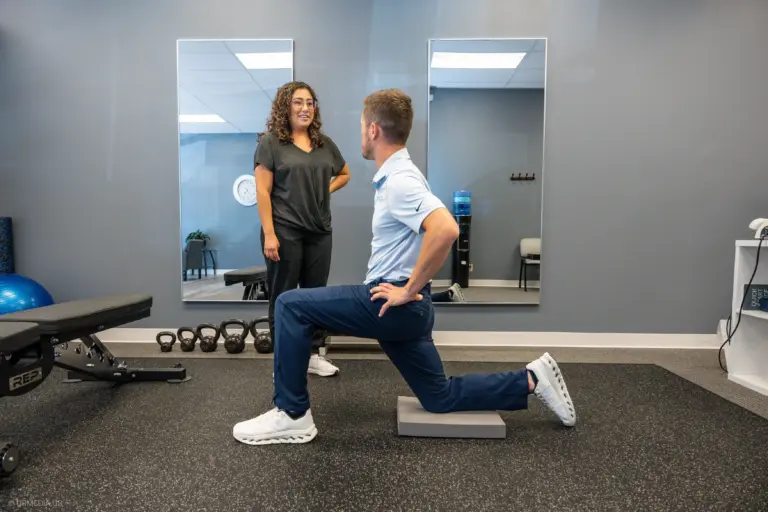
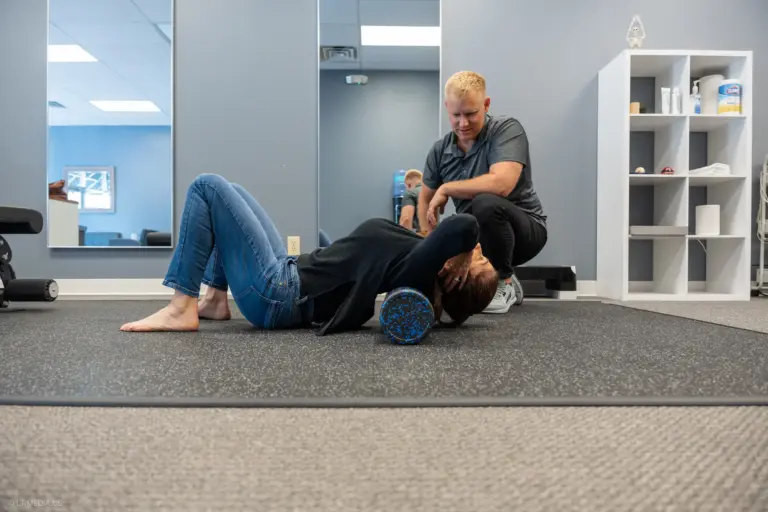
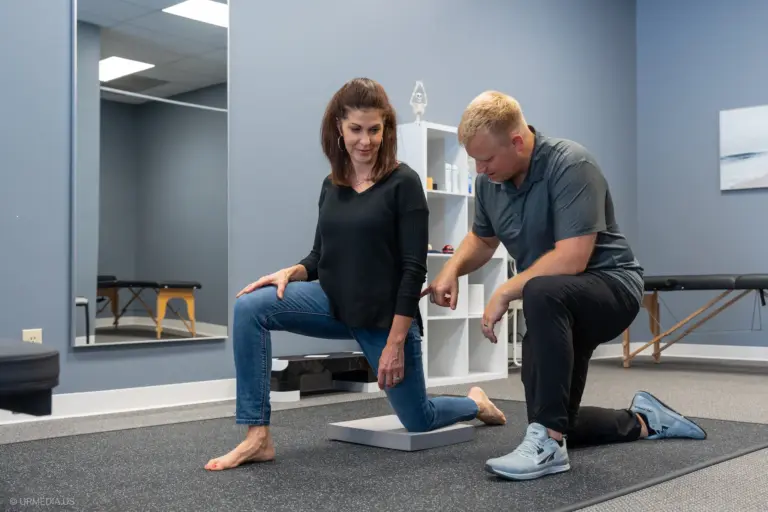
A disc treatment plan is not a single plan. What helps depends on the type of herniation, which movements ease or provoke your symptoms, whether a nerve is involved, and how you are trending. We keep you as active as your symptoms allow, calm nerve irritation, use hands-on and exercise-based care matched to your exam, and educate you about the favorable natural course. Then we reassess on a real timeline and adjust, or bring in the right partner, if you are not trending well.
Progressive weakness, or the emergency red flags of bowel or bladder changes or saddle numbness, mean prompt evaluation, and we act on those immediately. Short of that, if recovery stalls or your exam points toward imaging, injection, or a surgical opinion, we say so and coordinate it. Most disc herniations get better without any of that.
The research behind this page:
Zhong M, et al. Incidence of Spontaneous Resorption of Lumbar Disc Herniation: A Meta-Analysis. Pain Physician. 2017;20(1):E45-E52.Chiu CC, et al. The probability of spontaneous regression of lumbar herniated disc: a systematic review. Clin Rehabil. 2015;29(2):184-195.
Brinjikji W, et al. Systematic Literature Review of Imaging Features of Spinal Degeneration in Asymptomatic Populations. AJNR Am J Neuroradiol. 2015;36(4):811-816.
Qaseem A, et al. Noninvasive Treatments for Acute, Subacute, and Chronic Low Back Pain: A Clinical Practice Guideline From the American College of Physicians. Ann Intern Med. 2017;166(7):514-530.